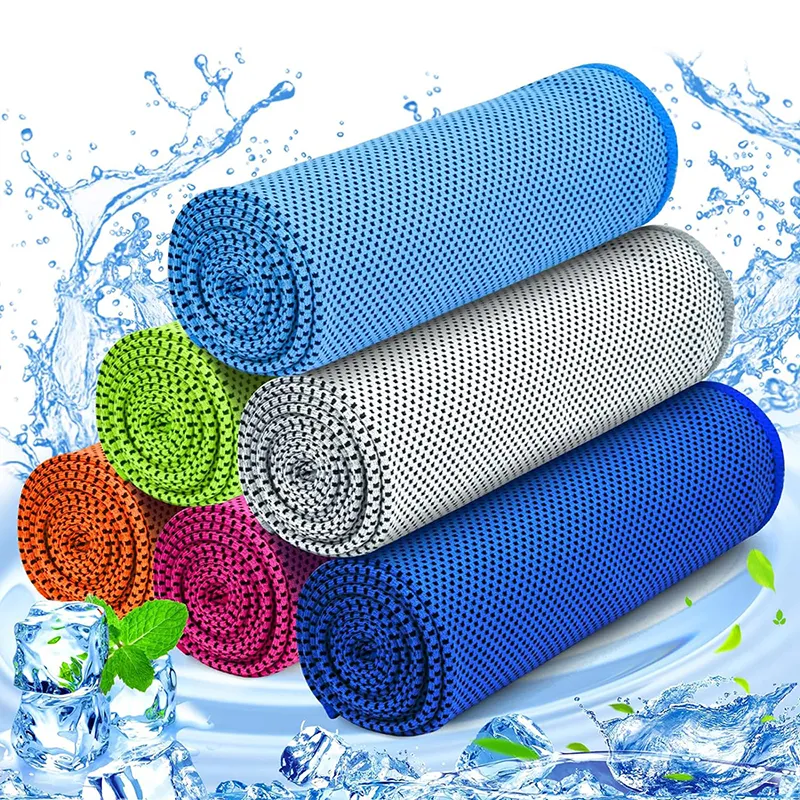
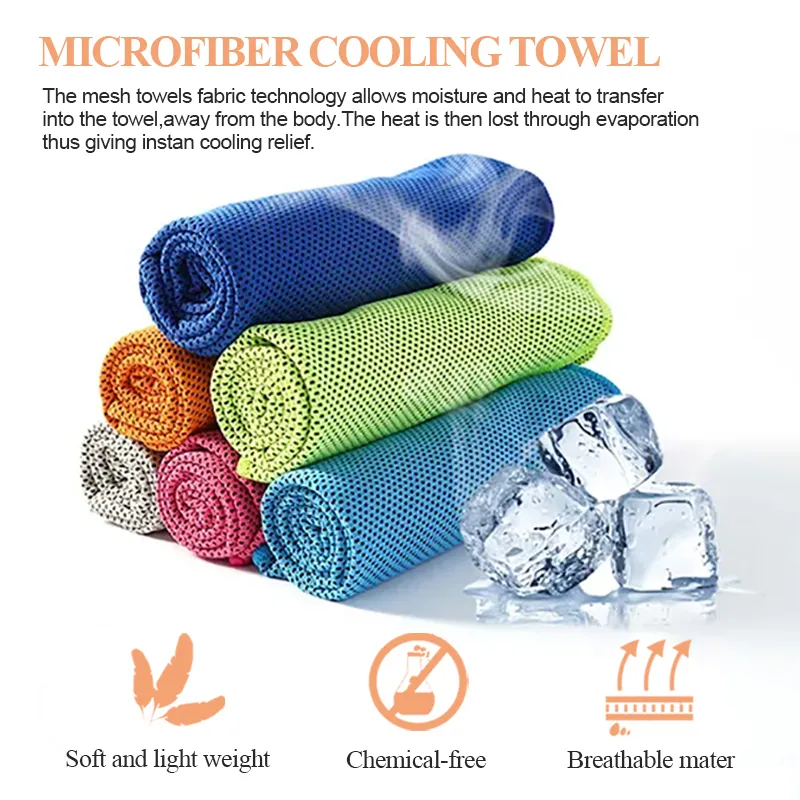
When sourcing cooling towels for retail, promotional campaigns, sports programs, or private-label projects, buyers often use the terms “manufacturer” and “supplier” as if they mean the same thing. In practice, the two business models can offer different levels of production control, customization support, order flexibility, communication, and sourcing efficiency.
Understanding these differences helps importers, distributors, sporting goods brands, and promotional product companies select a partner that fits their order size, product specification, budget, and delivery schedule. The better choice is not always the factory with the lowest quotation or the supplier with the widest catalog. It depends on what the buyer actually needs.
A cooling towel manufacturer is directly involved in producing the towel. Depending on the factory setup, manufacturing activities may include fabric knitting, dyeing, cutting, sewing, logo application, inspection, and packaging. Some factories complete every process internally, while others outsource selected steps such as printing, embroidery, or retail packaging.Working directly with a manufacturer can be valuable when the project requires a specific fabric structure, custom dimensions, controlled color matching, private labels, or repeated production using the same confirmed specification. A manufacturer may also provide clearer information about production capacity, technical limitations, sampling procedures, and quality-control checkpoints.
A cooling towel supplier is a broader term. The supplier may be a factory, exporter, trading company, sourcing company, wholesaler, or distributor. Some suppliers own production facilities, while others work with several factories and coordinate product selection, customization, inspection, consolidation, and export.Suppliers can be useful for buyers that need a wider product range, smaller mixed orders, consolidated shipments, or assistance sourcing several related towel categories. For example, a buyer looking for cooling towels for sale may prefer a supplier that can offer ready specifications, available colors, packaging options, and related microfiber products through one communication channel.
| Evaluation Area | Manufacturer | Supplier |
|---|---|---|
| Production role | Directly produces the product or controls major production processes | May manufacture, trade, distribute, or coordinate production through partner factories |
| Product range | Often concentrated on specific materials or towel categories | May offer a broader catalog from several production sources |
| Customization | Usually stronger for technical specifications and repeat production | Can coordinate customization, but capability depends on partner factories |
| MOQ flexibility | May require factory-level minimum quantities | May offer stock, mixed products, or more flexible order structures |
| Communication | Can provide direct technical answers, but export support varies | Often provides stronger multilingual sales, documentation, and project coordination |
| Price structure | May offer direct production pricing for suitable order quantities | May include coordination, sourcing, inspection, and export service costs |
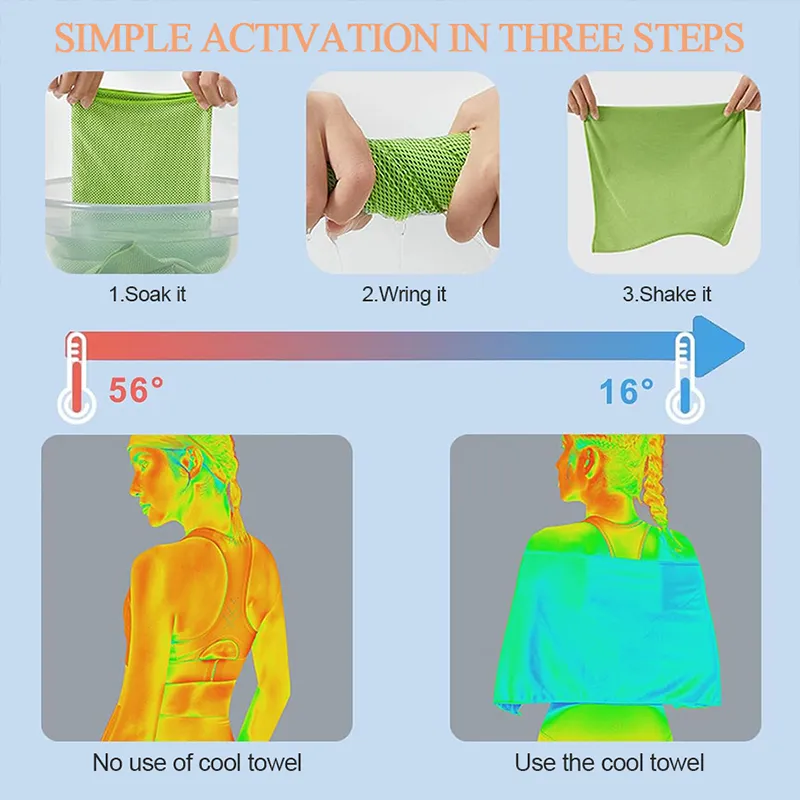
A direct manufacturing relationship is usually more suitable when the buyer has a clear specification and expects repeat orders. It can also be beneficial when product consistency is more important than catalog variety.Consider working directly with a manufacturer when:
You need custom dimensions, fabric weight, color, stitching, or packaging.
You expect medium or large repeat orders.
You require a confirmed production sample before mass production.
You need better visibility into quality-control procedures.
You want to maintain the same specification across several purchase cycles.
You need technical clarification about material and construction.
Product specialization also matters. A factory experienced in sports textiles may be better prepared to develop a cooling gym towel with suitable dimensions, lightweight construction, comfortable hand feel, and packaging for fitness clubs, events, or sports retailers.
A supplier can be the better option when the buyer values flexibility, product variety, export coordination, or smaller trial orders. This is especially relevant for new brands testing several products before committing to larger production volumes.Consider working with a supplier when:
You need several towel categories in one order.
You want to compare multiple materials or constructions.
You need shipment consolidation from different factories.
Your team needs help with packaging, documentation, or export procedures.
You want to start with stock or low-risk trial quantities.
You prefer one project coordinator for several related products.
For example, a golf accessories distributor may require cooling towels together with a golf cooling towel, standard golf towels, and customized packaging. A capable supplier may simplify the process by coordinating these related items under one sourcing project.
Not necessarily. Direct factory pricing may be attractive when the order matches the factory’s standard production process and minimum quantity. However, a lower unit price does not automatically mean a lower total sourcing cost.Buyers should also calculate:
Sampling and development charges
Custom color or fabric minimums
Printing plates, embroidery setup, or packaging tooling
Inspection costs
Domestic transportation
Export documentation
Shipment consolidation
Cost of quality problems or production delays
A supplier with efficient project management may create more value even if the quoted unit price is slightly higher. The correct comparison should be based on total landed cost, order risk, and the time required to manage the project.
Buyers should not rely only on the wording used on a website or marketplace profile. A company may describe itself as a manufacturer while outsourcing most production, or it may operate both manufacturing and trading activities.Use the following checks:
Ask which production processes are completed internally.
Request production-line, quality-control, and packaging photos or videos.
Confirm the address of the production facility.
Ask who controls fabric procurement and color approval.
Review sample labels, cartons, and export documents where appropriate.
Request a clear explanation of subcontracted processes.
Conduct a factory audit or third-party inspection for major orders.
Outsourcing is not automatically a problem. What matters is whether the company is transparent and can control the approved specification, quality standard, production schedule, and corrective-action process.
Cooling towel projects often involve more than selecting a color from a catalog. Buyers may need to compare fabric structures, cooling mechanisms, sizes, logo methods, containers, pouches, or retail display options.Ask whether the partner can provide:
Material and construction recommendations
Existing samples for comparison
Custom color matching
Logo and packaging mockups
Pre-production samples
Wash and appearance checks
Shipment inspection records
Buyers comparing product concepts may also review a cool touch ice towel alongside a standard cooling towel. The comparison can help determine which construction, texture, activation method, and positioning are better suited to the intended market.
Regardless of the business model, buyers should ask the same core questions before approving a project:
What material and fabric construction do you recommend for this application?
Which specifications are standard and which require customization?
What is the MOQ for stock, custom color, logo, and packaging?
Can you provide a sample or pre-production sample?
Which production processes are completed internally?
What quality checks are conducted before shipment?
What is the estimated production lead time?
How will approved colors, artwork, and dimensions be recorded?
Can you support repeat orders using the same confirmed specification?
Who is responsible if the finished goods do not match the approved sample?
Start by defining the project before contacting potential partners. Prepare the intended application, target customer, dimensions, material preference, color, logo method, packaging, estimated quantity, destination, and required delivery date.Then compare each company according to:
Relevant product experience
Ability to meet the required specification
Transparency about production
Sample quality
MOQ and price structure
Quality-control process
Communication speed and accuracy
Export and documentation support
Capacity for repeat orders
A manufacturer may be the right choice for a stable, customized, high-volume program. A supplier may be more suitable for product variety, smaller trials, mixed orders, or consolidated sourcing. Some companies combine both roles by operating production capabilities while also coordinating complementary products.
Runtu supports overseas B2B buyers sourcing cooling towels and related microfiber towel products. Depending on the confirmed product and order requirements, available project support may include product selection, dimensions, colors, branding, labels, packaging, sampling, and bulk-order coordination.Buyers can provide the target market, application, required quantity, product specifications, customization details, packaging requirements, and delivery schedule to receive a more relevant sourcing proposal.
The main difference between a cooling towel manufacturer and a supplier is the company’s role in production and project coordination. A manufacturer is generally closer to the production process, while a supplier may offer broader sourcing, product selection, export, and consolidation services.Neither model is automatically better. Buyers should choose the partner that can consistently meet the required specification, quality standard, quantity, communication expectations, and delivery plan. Verifying actual capabilities is more important than relying on the words “manufacturer,” “factory,” or “supplier” alone.