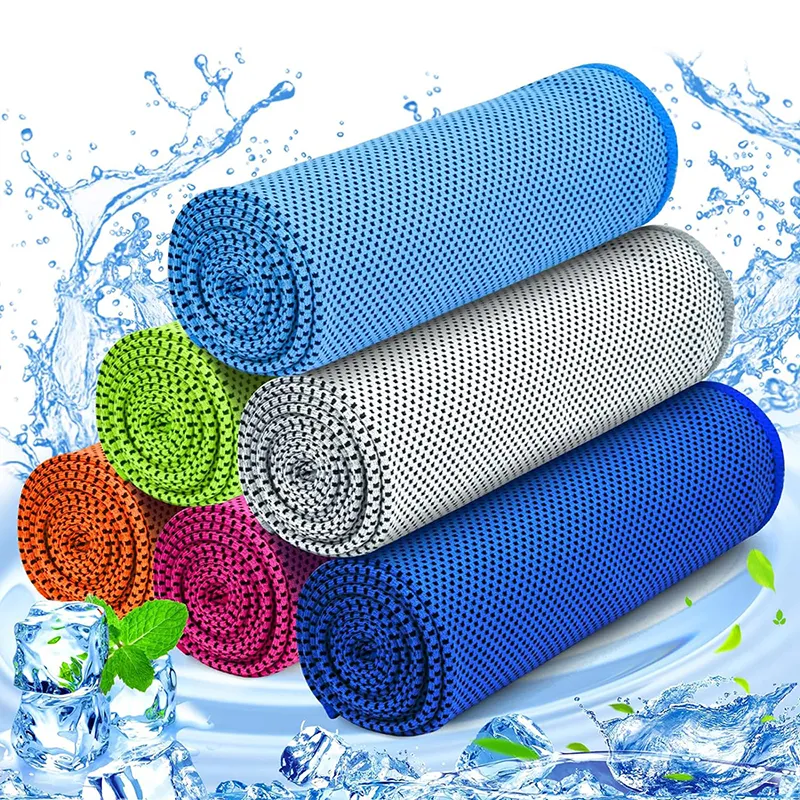
Finding a reliable cooling towel manufacturer is one of the most important decisions for distributors, promotional product companies, sporting goods brands, retailers, and private-label buyers. The right manufacturing partner can help maintain consistent product quality, stable production capacity, clear communication, and on-time delivery.
However, not all manufacturers offer the same level of expertise. Some focus only on standard products, while others provide OEM and customization services for overseas brands. Understanding what to evaluate before placing a bulk order can help buyers reduce sourcing risks and build a more stable supplier relationship.
An experienced supplier should understand the different requirements of promotional, sports, retail, and private-label markets. Based on the intended application, the supplier should be able to recommend suitable materials, dimensions, fabric weights, colors, packaging methods, and customization processes.
For example, buyers sourcing cooling towels for sale in promotional markets may prioritize lightweight materials, compact packaging, and custom logo printing. Sports brands may place greater emphasis on moisture management, fabric durability, comfortable texture, and repeat-use performance.
Companies developing broader fitness and promotional product lines may also need custom sports towels for gyms, running events, sports clubs, yoga studios, and branded campaigns. A supplier with experience across several sports towel categories may be better prepared to support future product expansion.
Before selecting a supplier, ask about:
Relevant towel production or sourcing experience
Main export markets
Available materials and fabric constructions
Production capacity
Quality inspection procedures
Previous OEM or customized projects
For many businesses, customization is just as important as the standard product itself. A suitable supplier should clearly explain which logo, labeling, color, sizing, and packaging options are available for the selected cooling towel.
If your project involves personalized cooling towels in bulk, confirm whether the supplier has experience working with promotional companies, sporting goods brands, retailers, corporate gift distributors, and private-label programs.
Buyers planning to expand their microfiber product range may also consider developing a personalized microfiber towel collection alongside cooling towels. Using related materials and coordinated branding can help create a more consistent product line for retail, cleaning, sports, or promotional markets.
Depending on the actual production capabilities, customization options may include:
Custom dimensions
Custom fabric colors
Logo printing or embroidery
Woven labels or care labels
Individual retail packaging
Custom inserts, sleeves, or display packaging
Before confirming an order, buyers should request samples or digital mockups and verify that the selected customization method is suitable for the material and intended use.
Minimum order quantity can vary according to the material, product dimensions, fabric color, logo method, and packaging requirements. A standard stock product may support a lower trial quantity, while a fully customized order may require a higher MOQ.
Buyers planning bulk cooling towel orders should evaluate production flexibility rather than choosing a supplier based only on the lowest unit price.
Important questions include:
What is the MOQ for standard products?
What is the MOQ for custom colors or logos?
Can the supplier support a sample or trial order?
What is the estimated sample lead time?
What is the expected bulk production time?
Does the lead time change during peak seasons?
A reliable supplier should provide a realistic production schedule based on the confirmed specification instead of offering an unsupported delivery promise.
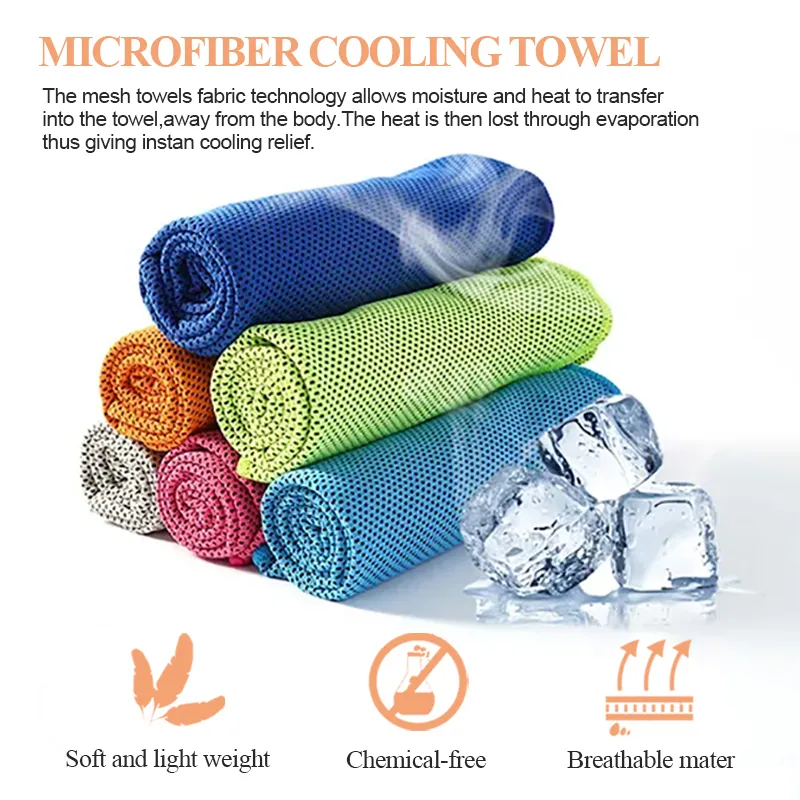
Cooling towels may look similar in product images, but their performance and suitability can differ according to fabric structure, fiber composition, weight, size, edge finishing, and manufacturing quality.
Before placing a large order, confirm the following information:
Material composition
Fabric construction
Product size
Fabric weight or GSM
Available colors
Edge finishing
Logo method
Packaging format
Care instructions
Buyers should also confirm how the cooling effect is achieved and whether the supplier can provide relevant product testing or technical information for any specific performance claims.
Product samples allow buyers to compare the supplier's actual product with the quotation and specification sheet. A sample review should examine more than appearance alone.
Depending on the project requirements, buyers may check:
Fabric hand feel
Dimensions and weight
Color consistency
Stitching and edge finishing
Logo position and clarity
Absorbency and drying behavior
Appearance after washing
Packaging quality
For customized orders, the supplier should also inspect the product against an approved sample or confirmed production specification before shipment.
Efficient communication is especially important when an order includes customized colors, logos, labels, or packaging. A professional supplier should provide clear quotations, explain available options, confirm specifications in writing, and report any production issue before it affects the delivery schedule.
Good project communication should cover:
Quotation details
Sample confirmation
Artwork and color approval
Production schedule
Quality inspection
Packing information
Shipping documentation
Clear documentation reduces misunderstandings and makes repeat orders easier to manage.
The most suitable supplier is not always the one offering the lowest initial quotation. Buyers should also consider whether the supplier can support related product categories as the brand grows.
For example, a company that begins with cooling towels may later introduce gym towels, yoga towels, golf towels, or custom beach towels with logo for seasonal promotions and outdoor campaigns. Working with a supplier that understands several related towel applications may simplify sourcing and help maintain consistent branding across the range.
Before confirming a cooling towel project, buyers should ask the supplier the following questions:
What materials and fabric constructions are available?
Which product specifications are standard?
Can the dimensions, color, logo, and packaging be customized?
What is the MOQ for each customization option?
Can a sample be provided before bulk production?
How long will sampling and production take?
What quality inspections are carried out?
How are customized specifications confirmed?
What information is required for an accurate quotation?
Can the supplier support repeat orders with consistent specifications?
Runtu supplies microfiber towel products for overseas B2B customers and supports customization based on specific project requirements. Available options may include dimensions, fabric colors, logos, labels, and packaging, subject to product specifications and order quantities.
Buyers can provide the required product size, estimated quantity, color, branding method, packaging request, destination market, and delivery schedule to obtain a more accurate quotation and production proposal.
Choosing a cooling towel manufacturer involves more than comparing unit prices. Buyers should evaluate the supplier's relevant experience, product specifications, customization capabilities, MOQ, production schedule, quality-control procedures, and communication process.
A well-prepared sourcing process helps reduce quality risks and creates a stronger foundation for repeat orders. For customized or bulk cooling towel projects, buyers should first confirm their intended application, product specification, estimated quantity, branding requirements, and target delivery date before requesting a quotation.